FlemingClans.com

"Scotland's Fleming Clan: a Genealogical History" - coming in 2027!
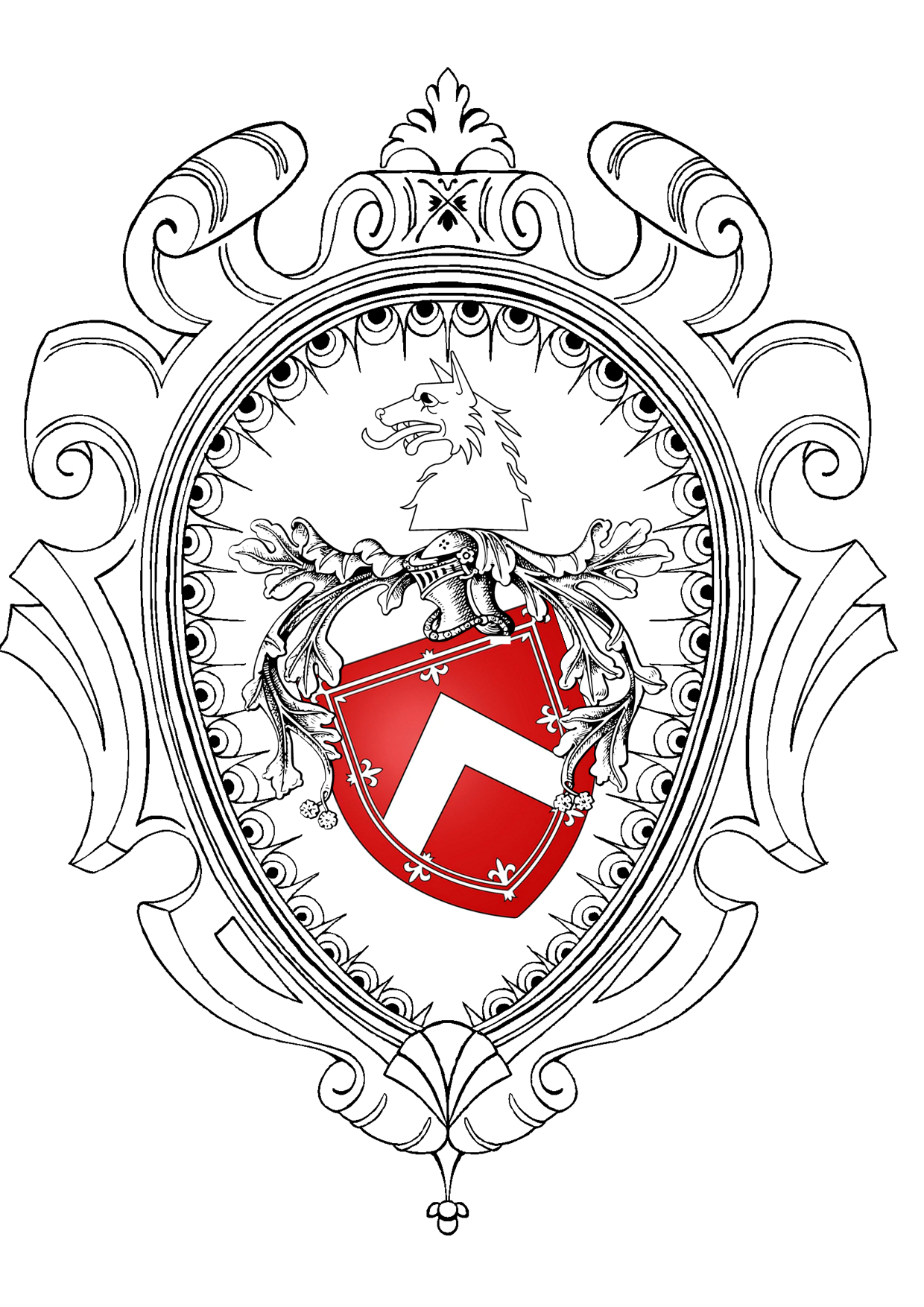 8th chief - Thomas Fleming of Fulwood, 2nd Earl of Wigtown
(c1333 - after 1382)
Basic information about this person: \click here\
Thomas Fleming inherited the earldom of Wigtown from his celebrated grandfather, spent much of his youth as a hostage in England, and then sold the earldom. He has often been judged a failure, but his choices make sense once the pressures he faced are understood.
A hostage for the King
Thomas was born around 1333, the son of John Fleming, heir of Malcolm Fleming, 1st Earl of Wigtown. King David II had been a prisoner in England since 1346, and in 1351 the English allowed him to visit Scotland in return for noble hostages. Thomas, then about eighteen, was one of them, serving from September 1351 to May 1352. He was nominated again in 1354, and when the king was finally ransomed by treaty in October 1357, Thomas went again to England as a hostage to provide security for future ransom payments, remaining there until about 1362.
Inheriting the earldom
Thomas’s father John died before September 1357, and his grandfather the Earl died soon afterwards, so Thomas inherited the earldom while he was in English hands. By 1360 he was styled Earl of Wigtown, sealing a charter of Marjory of Montgomery. His absence made it hard to manage scattered estates, and from 1359 he leased lands in Lenzie, including Croy, Auchinbee, Twechar, Bord and Balloch, to Sir Robert Erskine.
A diminished earldom
At some point in the 1360s Thomas resigned the earldom to King David “by staff and baton” and returned a sum of money. On 26 January 1367 the king restored it to him, but without the right of regality, the powers of justice that gave a medieval earl much of his authority and income. His seal of 1366 still bore the Fleming chevron within a double tressure, with a wolf’s head crest.
Wigtown lay in Galloway, where Archibald Douglas, “the Grim”, was building an overwhelming power. A distant earldom without regality, surrounded by a powerful and ambitious neighbour, was worth little to a lord whose main lands lay near Glasgow and Stirling.
Sale of the earldom
On 8 February 1372 Thomas sold the earldom of Wigtown to Archibald Douglas for five hundred pounds. King Robert II confirmed the sale, and on 19 April 1372 Thomas resigned the lordship of Wigtown to the king personally at Perth, keeping only the barony of Carnysmule. Parliament ratified the sale at Stirling that October. From 1375 he was styled simply “Thomas Fleming of Fulwood”.
Seen in context, the sale looks like a sound business decision. Thomas turned an asset of little practical value into a large sum of ready money at a time when the family urgently needed to invest in its core estates, including the building of a new castle at Cumbernauld.
Handing on the inheritance
Thomas raised further money against his lands. In November 1372 he mortgaged his lands in Lenzie to William Boyd for eighty pounds, and in 1375 his cousin and heir Malcolm Fleming of Biggar took over that debt. Also in 1375 he pledged Cumbernauld to John Kennedy of Dunure for 120 merks, and he granted Kirkintilloch to the Kennedys to be held of himself.
Thomas had no son to succeed him. On 20 September 1382 he resigned the barony of Lenzie and his other estates in favour of his cousin and male heir, Sir Malcolm Fleming of Biggar, and the king ratified the transfer. Thomas kept only his home at Fulwood, and he died soon after 1382.
Legacy
Thomas never held high office, never went to war and he gave up the title his grandfather had won. Yet he served his king as a hostage for many years, kept the family’s core estates together in very difficult times, and passed them smoothly to his heir. Under the Biggar line those estates became the foundation of the Lords Fleming, who would one day regain the earldom of Wigtown.